How to Create a Sales Funnel from Your Instagram Bio
Step-by-step guide to turning your Instagram bio link into a real sales funnel: from traffic capture to closing clients, without complicated tools.
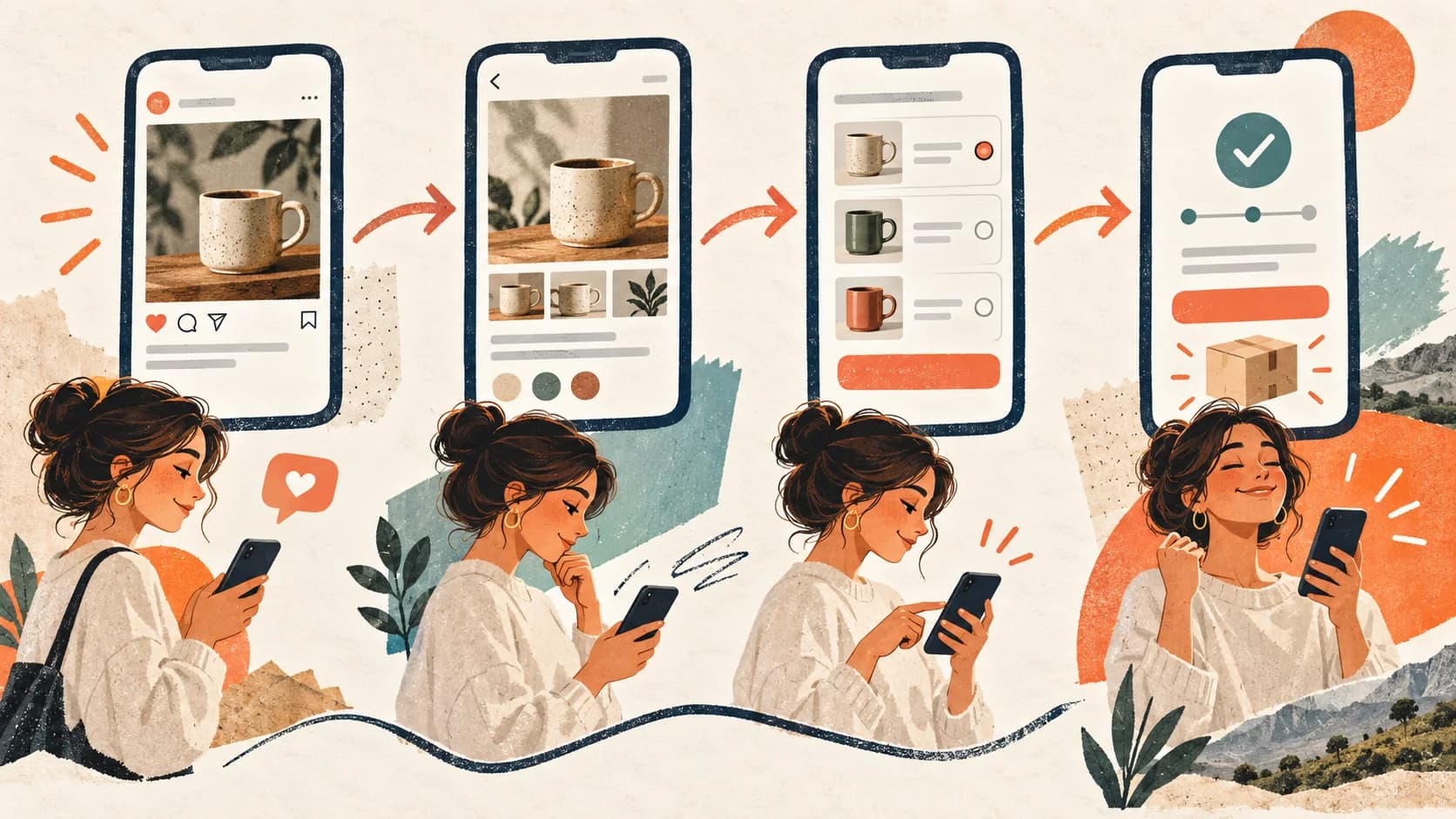
Your Instagram profile can contain links, but a collection of destinations is not automatically a sales funnel. A funnel continues the promise of the post, learns what the visitor needs, and makes one relevant next action easy. This guide shows how to design that journey without unnecessary steps.
A sales funnel doesn't have to be complicated. At its most basic: capture attention → qualify intent → guide toward action. Your bio link can do all three.
Why a simple bio link isn't enough
The problem with Linktree and similar tools is that they treat every visitor the same way. But your Instagram profile is visited by very different people: curious followers, ready-to-buy potential clients, existing customers looking for support, potential collaborators. Sending them all to the same list of links means no one gets the experience they need.
A real sales funnel from your bio link works differently: it identifies who the visitor is, asks them the right questions, and takes them exactly where they need to go — and only when they're ready.
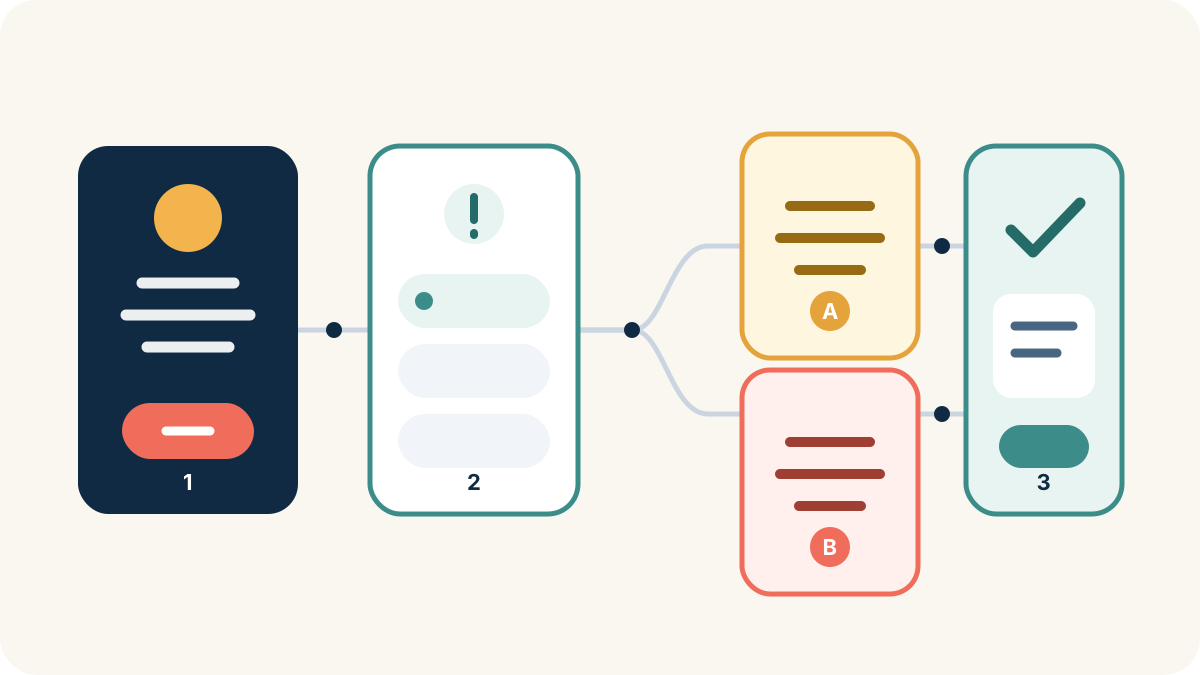
The three components of a bio link funnel
1. The entry: capturing attention
The first screen of your bio link is your hook. It has to answer the question 'is this for me?' in under 3 seconds. Best practice is to use an outcome-focused headline — what the visitor will achieve — rather than what you offer. Instead of 'Productivity Coach', try 'Work less, achieve more'. Instead of 'Wedding photographer in Austin', try 'Looking for a wedding photographer in Austin?'
2. Qualification: filtering intent
This is the step most businesses skip — and the one that leaves the most money on the table. Before showing your offer, make the visitor answer one or two questions: 'What exactly are you looking for?', 'What's your current situation?', 'What's your budget?'. This has two effects: it filters out people who aren't a good fit, and it increases commitment from those who are, because they've invested time in answering.
3. Conversion: the specific action
After qualification, each visitor arrives at a personalized screen with a single clear action: book a call, download a lead magnet, view pricing for a specific service, or make a direct purchase. Conversion is higher because the visitor already knows they're in the right place.

Map the Instagram content to the right path
Do not start with the page builder. Start with the posts that actually create profile visits. Group them by intent and decide what a visitor should see next.
| Source content | Likely intent | Useful first step | Primary outcome |
|---|---|---|---|
| Educational Reel | Solve a specific problem | Matching checklist or short guide | Lead capture |
| Case study carousel | Evaluate your expertise | Proof plus one fit question | Qualified inquiry |
| Product demonstration | Understand the offer | Product details and objections | Checkout |
| Behind-the-scenes Story | Build trust or connect | Relevant service or newsletter | Booking or subscription |
Message match matters more than the number of links. If the Reel explains how to price a service, continue with a pricing resource or consultation route. Sending that visitor to a generic homepage forces them to find the thread again. Use the platform strategy guide to keep the destination aligned when the same profile link also serves TikTok, YouTube, or LinkedIn.
How to build the funnel step by step
- Define your visitor types: who comes to your bio and what does each of them need?
- Design the question tree: 1–2 questions that segment each visitor type
- Create personalized destinations: a different closing screen for each profile
- Add email capture at peak intent (right before revealing valuable content)
- Connect the final outcome: call booking, sales page, catalog, or contact form
- Measure and optimize: where do most people drop off? Which profile converts best?
Peak intent in a bio link funnel is usually right before revealing the price, the booking calendar, or the exclusive content. That's the perfect moment to ask for the email.
Practical example: business coach
Imagine you're a business coach. Your current bio link leads to a list with 'My program', 'Work with me', 'My blog', and 'Instagram'. Every day you get 50 visits and 0 inquiries.
With a bio link funnel, the flow would be: Screen 1 — 'Where is your business right now?' (options: Just starting / Growing / Scaling). Based on the answer, the visitor sees a different proposal. 'Just starting' sees your entry-level course. 'Growing' sees your 1:1 mentorship program. 'Scaling' sees your premium consulting service. In all cases, before reaching the price, the system asks for the email to send a 'Free resource kit for your business stage'.
This is a planning example, not a promised result. The numbers you observe will depend on traffic quality, offer, price, and trust. Use your own baseline before judging whether routing improves performance.
The 4 most common mistakes when building a bio funnel
- Too many questions: more than 3 steps before the final action dramatically reduces conversion
- Generic options: 'Yes / No / Maybe' doesn't segment — use specific options that reflect real client situations
- Not capturing the email: if the visitor doesn't convert today, you need a way to reconnect tomorrow
- Same destination for everyone: the most expensive mistake — if the funnel leads everyone to the same place, it's not a funnel
Measure the Instagram funnel for 14 days
Before changing the flow, record a baseline for at least one normal content cycle. Track profile-link visits, first-screen choices, valid leads, bookings or purchases, and the source post where possible.
Calculate four simple rates:
- Next-step rate: people who take the primary action divided by bio-link visits.
- Completion rate: people who finish the form, booking, or checkout divided by those who start it.
- Qualified lead rate: suitable inquiries divided by all submitted inquiries.
- Revenue per visitor: net attributable revenue divided by bio-link visits.
Review paths separately. A route with fewer leads can still be more valuable if those leads fit the offer. When testing copy or order, change one element at a time and keep the traffic source comparable. The bio-link analytics guide explains how to turn these events into a useful scorecard.
Do not optimize a sample result
Ten visits and one sale do not establish a conversion rate. Record the sample size, compare like-for-like periods, and treat small swings as uncertainty rather than proof.
Choose tools by the job they must complete
A link page can be enough if every visitor only needs a short list of destinations. A form tool can work when qualification is the main job. A storefront fits product discovery and payment. A bio funnel is useful when the same Instagram profile serves multiple intents and the route must change after an answer.
Compare the complete path, not brand labels. Check whether your setup can:
- preserve the message from the source post;
- ask only the information needed for the next decision;
- connect email, calendar, product, or checkout without a broken handoff;
- record the events you need to diagnose drop-off;
- stay fast and readable inside Instagram's in-app browser.
SellBio combines a bio page with forms, lead capture, conditional paths, products, checkout, CRM, and analytics depending on the plan. Linktree and other platforms also offer more than static buttons, so the fair comparison is the exact workflow and plan you need—not an outdated feature stereotype.
If the first conversion is permission to follow up, design the lead-capture step before sending traffic so the promise, consent, and confirmation are explicit.
Conclusion: build one useful Instagram path
An Instagram sales funnel begins before the bio click. The content creates a promise, the profile confirms it, and the destination helps the visitor make the next decision. Start with one source-content category and one outcome. Add segmentation only when different answers genuinely require different next steps.
Build the smallest complete journey
Publish one path, test it from an actual Instagram profile, and watch where real visitors stop. A shorter journey with clear message match is more useful than a complex funnel built on assumptions.
Ready to turn followers into customers?
Sell products, capture leads, take bookings, and guide every visitor from one link.