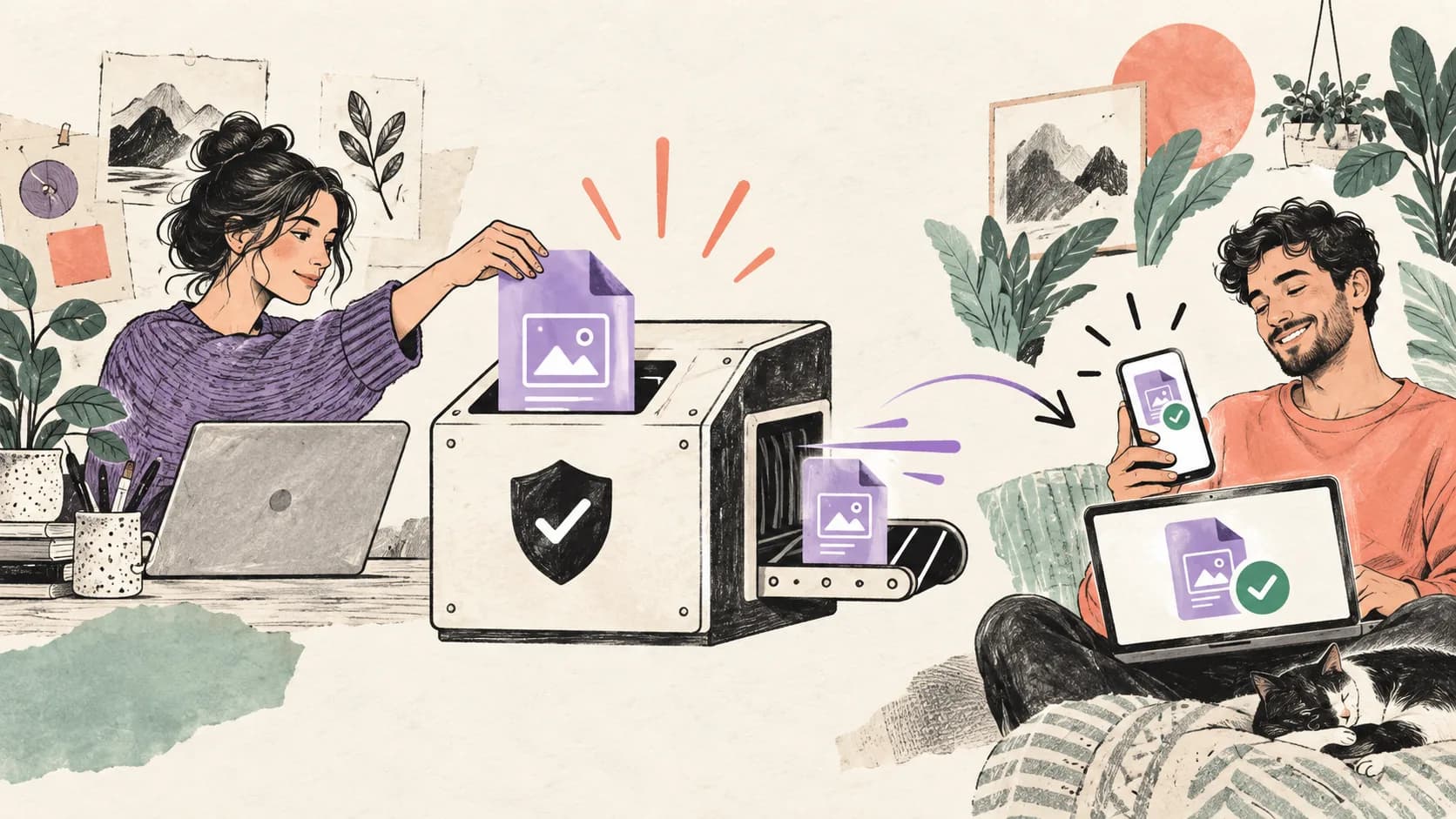
How to Capture Leads From Your Bio Link (2026 Guide)
Most bio links collect clicks, not leads. Learn the exact framework to turn social traffic into qualified email leads — without paid ads or a separate landing page.

A bio link that drives 10,000 clicks but captures zero emails is a vanity metric, not a business asset. The whole point of social media traffic is to convert it into something you own — an email list, a CRM record, a booked call. This guide walks through the exact framework to turn raw bio link traffic into qualified leads, without paid ads, a separate landing page, or any technical setup.
What you'll learn
Why most bio links don't capture leads, the three structural pillars of lead capture inside a bio link, the lead magnet patterns that work in 2026, the qualifying questions that pre-segment your traffic, and the follow-up that turns leads into revenue.

Why clicks aren't leads (and why that matters)
There's a measurable gap between a bio link click and a captured lead. A click is a person interested enough to tap. A lead is a person interested enough to give you their email, phone number, or a calendar booking. Most creators and small businesses confuse the two — they look at click counts and feel like things are working — but the click count is meaningless if it doesn't turn into something you can act on.
The reason this matters is simple: social media traffic is rented. Every Instagram follower, every TikTok viewer, every LinkedIn connection is technically yours but practically the platform's. Algorithm changes, account suspensions, and shifting attention can wipe out reach overnight. An email list, a CRM record, or a calendar full of bookings — that's owned audience. That doesn't disappear when Instagram changes its algorithm.
A bio link's job is to convert rented audience into owned audience. Clicks are necessary but insufficient. Captures are the actual goal.
This is also where most bio link tools fall short. They're built to display a list of links and count clicks. Lead capture is a bolt-on, not the foundation. If you're comparing tools, one of the most important questions is whether lead capture is treated as a first-class feature or a workaround.
The three pillars of bio link lead capture
Effective lead capture inside a bio link rests on three structural pillars. Skip any one and the system breaks.
Pillar 1 — A reason to give you their email. This is the lead magnet: a free thing of real value that someone would only get by submitting their email. Without this, no amount of design or copywriting will turn clicks into captures. People don't give up email addresses because they like your brand — they give them up because the trade feels worth it.
Pillar 2 — A capture mechanism with low friction. Even with a great lead magnet, a clunky capture form will tank conversions. The capture experience needs to be fast, mobile-optimized, and immediate. The visitor should be able to go from "I want this" to "I have this" in three taps or fewer.
Pillar 3 — A follow-up sequence that delivers and continues. Capturing the email is step one. The first email after capture is what determines whether the lead becomes a customer or unsubscribes within a week. The follow-up sequence is the part most creators ignore — and it's where most of the revenue actually lives.
Each pillar amplifies the others. A great lead magnet with a broken capture flow loses everyone. A great capture flow with a weak lead magnet captures few. A great capture with no follow-up captures leads that go nowhere. All three need to work together.
The lead magnet that actually works in 2026
Lead magnets have evolved. The "free 50-page PDF guide" that worked in 2018 is dead. Today's audience has trained to spot generic lead magnets and ignore them. What works in 2026 is highly specific, fast-to-consume, and obviously useful within minutes.
The specific template. Not a guide about how to write emails — an actual cold outreach email template you can copy, customize, and send today. Not "10 tips for better photos" — an actual lightroom preset, a Notion template, a Figma file. Specific beats general every time.
The mini-tool or calculator. A pricing calculator. A bio link audit checklist. A 15-question assessment that returns a score. Tools convert better than guides because they require interaction and produce a personalized output.
The pre-recorded short video training (5-15 minutes). Long enough to build trust, short enough to actually watch on a mobile screen. Specific enough to teach one tactic, not a "complete masterclass." A 12-minute video on "how to write a TikTok hook that gets watched to completion" outperforms a 90-minute course on social media strategy by 5-10x in capture rate.
The "swipe file" or curated collection. A collection of 20 examples (cold emails, landing pages, hooks, headlines) curated and annotated. Easier to consume than a course, more valuable than a single example, and difficult to recreate from scratch.
The free starter version of your paid product. If you sell templates, give away one of the templates. If you sell a course, give away the first module. This is the highest-converting lead magnet because the lead is already qualified — they wouldn't take a free starter version of something they had no interest in buying.
The thread across all of these: the lead magnet should match the offer behind it. If your business sells a $200 design course, your lead magnet should be a piece of that course or a related design tool. A mismatch ("free meditation guide" → upsell to a $200 design course) will capture leads but won't convert any of them. For a deeper look at this principle, the how to qualify leads from your bio link guide covers it in detail.
The 30-second test for lead magnets
Show your lead magnet to someone in your target audience. If they can't tell you in 30 seconds what it is, who it's for, and why they'd want it — it's not specific enough. Generic lead magnets ("free social media guide") fail this test. Specific lead magnets ("the cold DM template I used to book 12 clients in 30 days") pass it instantly.
The capture mechanics that convert
Once you have the right lead magnet, the capture mechanics determine how many people actually trade their email for it. Here's what works in 2026.
One field, not three. Email and only email on the first capture screen. Every additional field — name, phone, company — drops conversion by roughly 5-10%. If you need that data, ask for it on a second screen after they've already committed.
Visible value before the form. Don't drop a generic capture form on screen one. Show what they're getting first — a preview, a screenshot, a result they'll see — then ask for the email. The order matters. Value, then ask. Not ask, then value.
Specific button copy. "Submit" converts worse than "Get the template." The button copy should describe the action's outcome, not the action itself. "Send me the swipe file" beats "Subscribe." Every word in the button copy should reinforce what they're getting.
Instant delivery. When someone submits their email, deliver the lead magnet immediately. A confirmation page with a download link beats a "check your email" message because email delivery has friction (spam folders, slow delivery, distraction). If your platform supports it, show the lead magnet inline on the next screen.
Mobile-optimized form fields. This sounds obvious but most bio link tools fail at it. The capture field should auto-focus on mobile, use the email keyboard layout (with @ and . prominent), and have a button big enough to tap with a thumb. Tiny forms on mobile are silent conversion killers.
The capture mechanics should feel like a single, fluid moment — not a multi-step interaction. The whole sequence (see lead magnet → enter email → receive lead magnet) should take under 30 seconds.
The qualifying questions that pre-segment your leads

A captured lead is good. A captured and qualified lead is better. Adding a single qualifying question — before or after the email capture — turns a list of names into a segmented list ready for differentiated follow-up.
Best practices for qualifying questions:
One question, multiple choice. Not five questions, not free text. One question with 3-4 options that map to your customer segments. "What best describes you?" with options like "I'm a beginner," "I'm growing," "I'm scaling" gives you actionable segmentation without friction.
The question should be useful to them, not just you. "What's your biggest goal right now?" feels like a question that helps them think — which is why they answer it. "What's your annual revenue?" feels like a question that helps you sell to them — which is why they don't.
Place it after the email capture. Asking the question before the capture adds friction. Asking it after — on the confirmation screen — converts almost as well as no question, but gives you the qualifying data anyway. Most people will answer because the email is already submitted; the question feels like a continuation, not a barrier.
Use the answer to shape the follow-up. If a beginner answers "I'm just starting out," the follow-up sequence should match that level. If they answer "I'm scaling," the follow-up should match that level. Same lead magnet, different downstream experience based on the qualifying answer. This is where conditional logic inside your bio link starts paying off — you can route different segments to different result screens or tag different segments for different email sequences.
This pattern is essentially a lightweight quiz funnel. For more on building one, the quiz funnel guide covers it in depth.
The follow-up that closes (or kills) the lead
A captured lead is worth nothing if the follow-up doesn't move them toward a purchase. The follow-up is where most bio-link-driven lead generation falls apart.
Email 1 (delivered immediately): the lead magnet itself. Don't bury the lead magnet behind a marketing email. The first email should deliver exactly what was promised, with a clear download link or access instruction. Subject: "Here's your [lead magnet name]." That's it.
Email 2 (24-48 hours later): the use-case story. Show how the lead magnet was used by someone in their position. A short story, a screenshot of a result, a 2-paragraph case study. The goal: get them to actually use the lead magnet. Lead magnets that go unused never turn into customers.
Email 3 (3-5 days later): the soft offer. Introduce the paid offer that solves the next problem the lead magnet creates. If your lead magnet is "the cold DM template," your soft offer is "the full course on running a DM-driven sales process." Make the connection explicit: "If the template helped, the full system will save you a month of trial and error."
Email 4-7 (over 7-14 days): proof, objections, urgency. Each email handles a specific question or objection. Pricing concern: address it directly with positioning. Time concern: address it with a "minimum effective dose" framing. Trust concern: address it with results from other customers. End with a clear, time-bound CTA.
The follow-up sequence is what most creators skip — and it's the difference between a lead list that grows but doesn't pay and one that consistently converts. A bio link that captures 1,000 emails but has no follow-up is worth less than one that captures 200 emails into a working sequence.
This is also where bio link analytics become critical. You need to see capture rate by traffic source so you can find out which content drives the highest-quality leads — not just the highest volume.
The 'collect emails and figure it out later' trap
The most expensive mistake in bio link lead capture is treating the email list as a future asset instead of a current channel. Every day you wait to set up the follow-up sequence is a day where new leads cool, forget who you are, and unsubscribe at 2x the rate they would have if you'd written to them in week one. Build the lead magnet, the capture, AND the follow-up before launching. All three or none.
Common bio link lead capture mistakes
The "thank you for subscribing" dead end. A capture flow that ends with "Thanks!" and no clear next step wastes the highest-intent moment in the entire funnel. Right after submission is when the lead is most engaged. Use that moment — surface a related offer, a community invite, a calendar link, or the lead magnet itself.
The form before the value. Asking for an email before showing what they're getting is the most common mistake. Always show the value first. Even a 3-second preview ("Here's the first page of the template — get the full version") dramatically increases capture rate.
Multiple lead magnets on one page. Offering "the template," "the course preview," AND "the free strategy call" on the same screen creates choice paralysis and lowers capture for all three. Pick one primary lead magnet per audience segment. If you have multiple segments, route to different lead magnets based on a qualifying question.
No mobile testing. Most bio link traffic is mobile. If you've only tested your capture flow on desktop, you've optimized for a tiny minority of your traffic. Open your bio link on a phone, capture an email, and time the experience. Anything over 30 seconds needs to be tightened.
Sending leads to a separate landing page. Adding a redirect from the bio link to a dedicated landing page adds load time, breaks context, and drops conversion 20-40%. Capture inline, on the same flow, no redirects. This is exactly where tools like SellBio outperform link directories — capture is built in, not bolted on. For a side-by-side, see the SellBio vs Linktree comparison.
Treating every lead the same. Without qualifying questions or segmentation, every captured lead enters the same generic sequence regardless of where they are in their journey. A beginner gets the same emails as someone ready to buy. The result: low engagement, low conversion, high unsubscribe rate.
Bio link lead capture isn't a feature you bolt onto a link list — it's a system with three pillars (the magnet, the mechanics, the follow-up) that all have to work together. Get the system right and your bio link becomes the single most reliable lead-gen asset you own — better than ads, faster than SEO, more durable than algorithm-dependent reach. The people who build it well stop worrying about where their next 100 leads will come from.
Explore SellBio plans, choose the page structure that fits your goal, and test the complete journey on mobile before publishing.
Related reads
- How to qualify leads from your bio link — Use conditional flows to pre-qualify visitors before they hit your inbox
- Build a quiz funnel in your bio link — Interactive lead capture that segments visitors automatically
- SellBio vs Typeform — Why your bio link can replace your form builder for lead capture
Ready to turn followers into customers?
Sell products, capture leads, take bookings, and guide every visitor from one link.