Bio Link Strategy for Every Platform (2026)
Learn how to tailor one bio link for Instagram, TikTok, YouTube, LinkedIn, X, and Threads — with the right CTA, funnel, and next step for each audience.
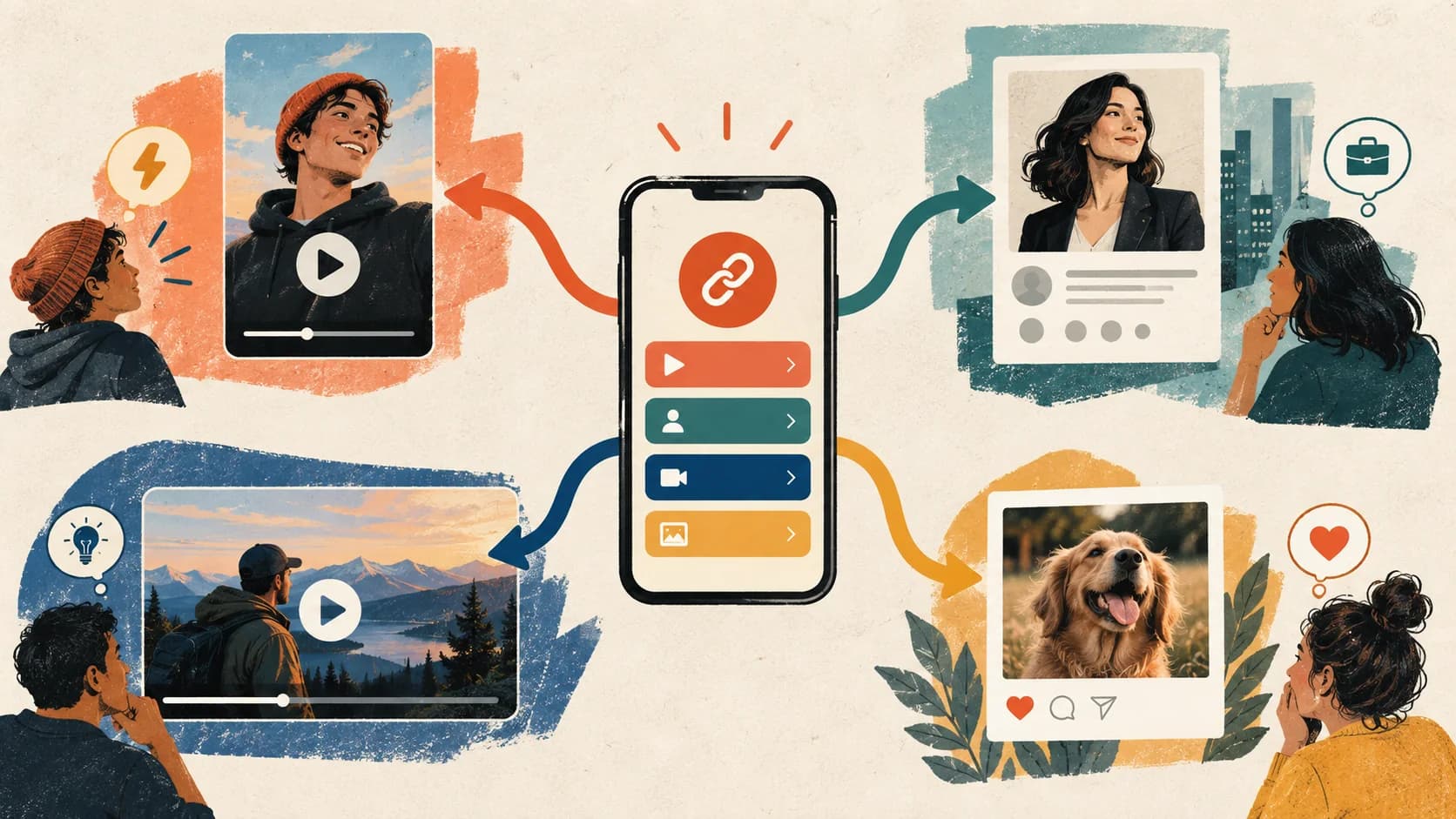
A bio link strategy is a plan for matching your profile link to the platform and visitor behind the click. Instagram, TikTok, YouTube, LinkedIn, X, and Threads create different expectations, so one generic link list can waste qualified traffic. This guide shows what to put first, which CTA to use, and when to route people into a different flow — without managing six separate URLs.
What you'll learn
The visitor profile and intent on each major platform, the exact bio link structure that converts on each, and how to run all six platforms through a single bio link without the chaos.

Why one generic bio link doesn't cut it across platforms
A bio link isn't a destination. It's a conversion event triggered by content on a specific platform. The platform shapes who taps it, what they expect, and how much patience they have when they arrive. Pretending all that traffic is the same is the most expensive mistake creators and small businesses make.
Consider three real differences:
Attention span varies by platform. A TikTok visitor lands with the residual energy of a 30-second video. They want fast. A YouTube visitor just watched 8 minutes of your content and is willing to read a few paragraphs. Same person, different headspace.
Intent varies by platform. Instagram visitors are usually in discovery mode — open to value, not yet ready to buy. LinkedIn visitors are often in evaluation mode — already considering whether you're worth hiring. Same offer, completely different distance to purchase.
Trust varies by platform. YouTube and LinkedIn build deep trust because content lengths are longer. TikTok and Instagram Stories build broad reach but shallower trust. Your bio link needs to acknowledge how much trust the platform has already built (or hasn't) before asking for a commitment.
A static bio link can't account for any of this. A platform-aware bio link strategy can — by tailoring the entry experience to each platform's visitor profile.
Instagram: lead magnet + immediate value
Instagram traffic is the most common bio link traffic, and it's also the most diverse. Your audience there includes lurkers, fans, peers, and prospects, all bouncing between Reels, Stories, and feed posts. The unifying behavior: they're scrolling for value, not actively shopping.
Visitor profile: Discovery mode. Some warm, mostly cold-to-warm. Mobile-first, short patience, but willing to engage if the value is obvious.
What works: A lead magnet (free guide, template, mini-course) as the primary CTA. Email capture in exchange for the free thing. Make the value crystal clear in the first screen — what they get, who it's for, and how long it takes to use it.
What kills conversions: A bio link that opens with "Welcome to my page" and a list of every offer you've ever made. Instagram visitors will not do the work of figuring out which one fits them.
Recommended structure:
- First screen: bold headline naming the free thing + image preview + "Get it free" CTA
- Second screen: email capture with one field
- Confirmation screen: instant access + invitation to follow on email for more
For a deeper look at this specific pattern, the Instagram bio link funnel guide walks through it screen by screen.
Platform-specific tip: Mention the lead magnet in your bio copy itself, not just in the link. "Free guide → link in bio" outperforms "Link in bio" by a wide margin because it sets expectations before the tap.
TikTok: short attention + impulsive intent
TikTok traffic is fundamentally different. The platform's algorithm is optimized for surprise and impulse, which means visitors arrive at your bio link in a state of "I just discovered you 90 seconds ago." Patience is near zero, but conversion can be surprisingly fast if the path is short.
Visitor profile: Cold-to-mildly-warm. Distracted, impulsive, often new to your content. High volume, lower per-visit quality, but the average visitor is more likely to take an action right now if it's easy.
What works: Short, punchy paths with low friction. A direct link to a single offer (a $9 template, a free trial, a Discord invite) often outperforms a multi-step funnel here. The TikTok visitor wants instant gratification — give it to them.
What kills conversions: Long intro screens, multi-step quizzes, or anything that asks for an email before delivering value. TikTok traffic that doesn't get a payoff in the first 5 seconds is gone.
Recommended structure:
- First screen: a single, bold offer with one CTA — buy, follow, claim, watch
- Optional second screen: lightweight email capture with a clear "skip" option
- Result: deliver the thing immediately
The complete TikTok bio link guide has the full breakdown for creators who get most of their traffic from TikTok.
Platform-specific tip: Use a different bio link experience for TikTok if you can. Even with the same URL, conditional logic based on referrer can serve a TikTok visitor a different first screen than an Instagram visitor — same tool, two flows.
YouTube: high intent, deep funnels
YouTube traffic is the highest-quality bio link traffic of any major platform. By the time someone navigates to your channel's About page or clicks a link in your video description, they've watched real content from you. They know your voice, your style, and what you actually teach.
Visitor profile: Warm to hot. Often in evaluation mode. Willing to read longer copy. Higher purchase intent per visit than any other platform except LinkedIn.
What works: Deeper funnels with more information. A YouTube visitor will read a longer first screen. They'll watch a 2-minute video. They'll fill out a longer form if it's clearly leading somewhere valuable. Treat them like the qualified leads they are.
What kills conversions: Treating YouTube traffic like Instagram traffic. A single-CTA, three-word page leaves money on the table because YouTube visitors are ready for more substance, not less.
Recommended structure:
- First screen: tailored to the video they likely came from (mention the topic explicitly)
- Mid-funnel: longer-form value (case study, written guide, demo video)
- Conversion screen: email capture, booking page, or product purchase
The YouTube bio link strategy guide covers how to use video-specific URLs with UTM parameters to track which video drives the most conversions — essential for any creator running a YouTube channel as a real business.
Platform-specific tip: Add the bio link in two places — pinned comment of your top videos AND your channel's About page. The pinned comment captures impulse traffic from each video; the About page captures channel-level traffic.
LinkedIn: B2B credibility and booked calls
LinkedIn bio link traffic is small in volume and large in value. A LinkedIn visitor who clicks your link is usually a prospect, a peer, or someone in a buying role. The conversion rate from LinkedIn traffic is typically the highest of any platform — often 5-10x higher than Instagram per visit.
Visitor profile: Hot. Already evaluating. Often in a buying or hiring role. Patient with longer content. Skeptical of obvious marketing.
What works: Booking calls. Case studies. Detailed service breakdowns with outcomes. A LinkedIn visitor wants proof and a path to action, not a free template.
What kills conversions: Free-content lead magnets that work great on Instagram. A "free guide" CTA aimed at a LinkedIn visitor who's evaluating you for a $20K engagement is a mismatch.
Recommended structure:
- First screen: clear positioning statement + result you deliver + CTA to book a call
- Optional second screen: 2-3 case studies or outcome metrics
- Conversion screen: calendar booking with qualifying questions
The LinkedIn to client-generation guide goes deeper on this pattern — especially valuable for coaches, consultants, and B2B service providers.
The LinkedIn bio link is your highest-leverage page
If you do nothing else from this guide, build a LinkedIn-specific bio link experience. Even at 50 clicks/month, LinkedIn traffic that converts at 30% will drive more revenue than 5,000 Instagram clicks at 1%. The math isn't close.
Platform-specific tip: LinkedIn lets you put a clickable link in the "Featured" section, the contact info, and your profile's website field. Use all three, all pointing to your bio link with different UTMs so you can see which placement drives the most qualified traffic.
X (Twitter): the link is the offer
X traffic is unique because the bio link itself is part of the offer. Twitter users live in the timeline. When they click your bio link, they're often expecting to land on something specific — a tool, a newsletter, a project, a piece of writing — not a multi-step funnel.
Visitor profile: Mixed. Often peers and prospects from your community. High frequency of engagement, lower per-visit time. Highly skeptical of overly polished marketing copy.
What works: A single, clear destination. A landing page for your newsletter. A direct buy link for your product. A page that reads like a Twitter post — punchy, opinionated, no-nonsense.
What kills conversions: Anything that feels like a "funnel" to a Twitter audience. They've seen every funnel pattern and will bounce the second they smell a quiz funnel or multi-step capture flow.
Recommended structure:
- Single screen with a clear, direct offer
- One CTA — buy, subscribe, read
- No questions, no quizzes, no friction
Platform-specific tip: Match your bio link copy to your Twitter voice. If your tweets are dry, sarcastic, and short, your bio link first screen should match. Mismatched tone is the fastest way to lose Twitter visitors.
Threads: community-first, soft sell
Threads behaves more like a hybrid between Twitter and Instagram. The audience expects conversation, not pitches. Bio link clicks are lower volume, but the visitors who do click are usually members of your community rather than passing scrollers.
Visitor profile: Community-aligned. Often already aware of your work. Patient with conversational copy, allergic to obvious sales language.
What works: An open-ended landing experience. A page that mixes free value (a recent essay, a useful resource) with a soft CTA (subscribe to my email, follow my newsletter). The Threads visitor wants to deepen the relationship, not transact immediately.
What kills conversions: Hard CTAs and "Buy now" pressure. The Threads audience reacts negatively to sales-forward bio links and will not engage.
Recommended structure:
- First screen: a piece of value (most recent good thing you wrote/made) with context
- Soft CTA: email subscription or community invite
- Optional: a single product mention as a footer, not the headline
The multi-platform architecture: one tool, six experiences

The temptation when you read all of this is to build six separate bio links and switch them manually. Don't. That's a nightmare to maintain and creates broken links every time you forget which one is live.
The better approach is a single bio link tool that supports conditional logic and platform-aware routing. With SellBio's conditional logic feature, you can use referrer signals or an explicit first question to route TikTok visitors to one flow, LinkedIn visitors to another, and Instagram visitors to a third — all from one URL.
The architecture:
- One bio link URL (the same one in every platform's bio field)
- A first screen that detects the platform (or asks "Where did you find me?")
- Branching paths to each platform-specific experience
- Shared analytics so you see which platform drives which conversion outcome
This is the difference between managing one tool and managing six. The lift in conversion rate from platform-tailoring is real. The cost of doing it manually across six tools is what eats most creators' time. Native conditional logic in a single bio link tool collapses that cost to zero.
If you're comparing bio link tools, this is one of the harder requirements to meet. Most tools don't support conditional logic at all. The few that do are usually built around it as a core feature, not a bolt-on.
For a side-by-side on this dimension, the SellBio vs Linktree comparison walks through how a static link list compares to a logic-aware bio link, screen by screen.
The shortcut everyone wants is "what's the best bio link strategy?" The honest answer is: it depends on the platform, and a good bio link strategy is six bio link strategies running through one URL. The work is in building each path once. The payoff is that every platform finally converts at its actual potential, not at the average of a one-size-fits-all page.
Explore SellBio plans, choose the page structure that fits your goal, and test the complete journey on mobile before publishing.
Related reads
- Complete TikTok bio link guide — Build a TikTok-specific bio link that converts impulse traffic
- YouTube bio link strategy — Turn long-form YouTube traffic into qualified leads
- Conditional logic in bio links — The feature that makes platform-aware routing possible
Ready to turn followers into customers?
Sell products, capture leads, take bookings, and guide every visitor from one link.