How to Write a Bio Link Quiz People Actually Finish
Learn how to write a short bio-link quiz people finish, place lead capture at the right moment, and use funnel data to improve every question and result.

A quiz can turn a bio link into a guided conversation: ask only what changes the recommendation, capture contact details when the value is clear, and send the visitor to a useful next step. It can outperform a link list for a segmented offer, but only your own traffic can establish that result.
The useful-quiz test
If every answer leads to the same generic CTA, you do not need a quiz. A useful quiz changes the route, recommendation, score or follow-up because of what the visitor tells you.
When a quiz is better than a link list
A link list is useful when visitors already know where they want to go. A quiz is useful when the correct destination depends on a small number of meaningful differences: goal, stage, fit or preference.
Imagine a coach with three offers. New visitors need a starter resource, active prospects need a programme comparison, and ready buyers need a booking path. Showing all three links is simple, but it makes the visitor diagnose themselves. One well-written question can perform that routing explicitly.
That does not mean a quiz is automatically better. It creates additional steps, and every step can introduce confusion. Keep the existing page as a control and test the quiz using the same traffic source and primary goal. The A/B testing guide explains how to compare those experiences without changing several variables at once.
Avoid using borrowed claims such as “five times more leads.” Quiz vendors frequently publish impressive numbers from their own customers, but those figures do not establish what will happen with your audience, offer or traffic. Your baseline is the relevant comparison.
What a bio-link quiz actually needs
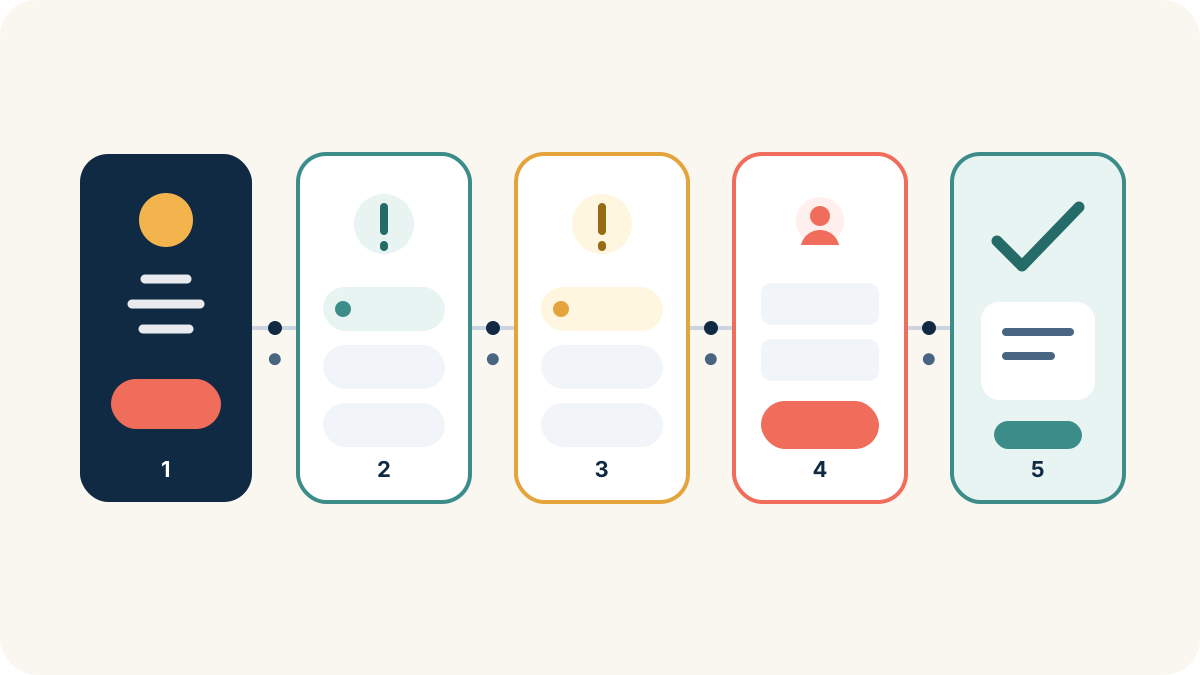
A bio-link quiz is a short sequence of screens inside the visitor journey. It begins with a specific promise, asks questions that affect routing or qualification, captures the required contact details, and finishes with a relevant outcome.
The five parts are:
- A clear promise. Explain what the visitor will understand, choose or receive.
- A low-effort first question. Confirm that the topic is relevant before asking for sensitive information.
- Only useful questions. Each answer should change the route, score, result or follow-up.
- A transparent value exchange. State what happens when someone provides their email or phone number.
- A next step matched to the result. Offer a resource, booking, product or other action that fits the visitor's path.
SellBio supports question screens, lead capture, screen-to-screen branching and scorecard-style results. In a simple flow, an answer can skip forward to a later screen. In an advanced flow, rules can direct visitors through different branches. The product also records screen impressions, completions and configured goals so you can inspect the journey rather than guessing.
For the underlying routing model, read the conditional logic guide and the quiz funnels feature.
Choose the right quiz format
The format should follow the decision the visitor needs to make.
Diagnostic quiz. Use this when someone wants to identify a constraint or stage. A consultant might ask about current process, urgency and the main obstacle, then provide a relevant assessment. Keep the language probabilistic: a short marketing quiz is guidance, not a professional diagnosis.
Recommendation quiz. Use this when you offer several products, services or resources. Ask about the differences that actually determine fit. A creator selling templates might ask about use case and desired complexity, then route to the appropriate product with its real current terms.
Scorecard. Use this when several answers combine into a meaningful score or result band. Define what each score represents before writing the questions. A score is only useful when the scoring rules are coherent and the result explains its limitations.
Audience or intent router. Use one question when segmentation is the only job. A coach can ask whether the visitor is learning, comparing programmes or ready to talk. Do not turn a routing choice into a six-question personality test.
Do not diagnose what you cannot substantiate
Health, legal, financial and psychological outcomes require appropriate expertise and safeguards. A marketing quiz can organize preferences or direct someone to information; it should not impersonate a qualified assessment.
Write questions people can answer
Start with the minimum set. Remove a question temporarily and ask: would the route, score, result or follow-up change? If not, the question is collecting data without improving the visitor's experience.
Use plain language and mutually distinct answers. “What do you need help with first?” is easier to answer than “Which strategic growth constraint best reflects your current operational maturity?” Avoid options that overlap so much that two answers feel equally correct.
Single- and multiple-select questions reduce typing on mobile. Free text still makes sense when the exact wording matters, but it increases effort and makes routing harder. Ask for it deliberately.
Order the flow from easy to sensitive. A useful sequence might be:
- current goal;
- relevant stage or constraint;
- one detail that changes the recommendation;
- contact information with a clear explanation;
- result and next action.
Do not rely on sunk-cost pressure. A progress indicator should clarify where the visitor is, not manipulate them into finishing. Test the published flow on an actual phone and time it before promising that it takes “60 seconds.”
Decide where lead capture belongs
There is no universal rule that email must appear before or after the result.
Showing a useful preview before the form can establish trust. Capturing before a detailed result can also be reasonable when delivery by email is genuinely part of the promise. What matters is that the exchange is explicit: what data you collect, what the visitor receives and whether they are consenting to follow-up.
Make the result meaningfully different. Route to a result that matches a selected answer, or use a scorecard result band when scoring is configured. Do not merely change the headline while sending every segment to the same generic page.
Then pair the result with one next step. A learner might receive a guide, a high-fit prospect might see a booking option, and a product shopper might see the relevant offer. The lead-capture guide covers the value exchange and follow-up in more depth.
Promote the outcome, not the mechanism
“Take my quiz” describes work. “Find the offer that fits your current stage” describes value. Lead with the useful outcome and say enough about the process for the visitor to make an informed choice.
Connect promotion to relevant content. A video about choosing a coaching programme can lead naturally to a programme matcher. A post about an inconsistent workflow can lead to a template recommendation quiz. An arbitrary requirement to mention the quiz in a fixed percentage of posts will create fatigue.
Use UTM parameters for distinct campaigns and sources. This allows you to compare the quality of traffic from a pinned profile post, newsletter or social campaign in bio-link analytics. Do not assume that a weak completion rate is a quiz-copy problem when the incoming message promised something different.
If the platform supports pinned content, pin the clearest explanation of the quiz. Platform controls change, so verify the current interface rather than publishing brittle instructions.
Measure the journey without fake benchmarks
Read the quiz as a funnel:
Entry-to-question progression. What share of sessions moves beyond the opening screen? A weak result may indicate an unclear promise, mismatched traffic or a technical problem.
Question progression. Compare screen impressions and completions to locate the largest drop. Inspect the wording, answer options and transition on that screen.
Lead or goal conversion. Measure sessions that complete the configured lead, booking, click, purchase or completion goal. Segment by source and campaign when UTM data is available.
Lead quality. The highest capture rate is not automatically the best outcome. Review whether captured contacts match the intended segment and take the next meaningful action.
Do not apply universal 50% or 60% thresholds. Establish the current funnel, collect enough sessions for each relevant path and change one meaningful variable. If traffic can be split consistently, compare the new version with a stable control.
Fix the first clear bottleneck
If many people see a question but few complete it, revise that screen before redesigning the whole quiz. Check meaning, answer coverage, mobile layout and the promise made immediately before it.
A quiz belongs in your bio link when a few answers can genuinely improve the recommendation or next step. Build the shortest useful version, compare it with the existing page and keep it only when progression, lead quality or goal conversion improves with enough evidence.
Build a quiz you can learn from
SellBio lets you combine questions, answer paths, lead capture and result screens inside one bio-link journey. Create your account and publish a quiz you can validate with real visitors.
Ready to turn followers into customers?
Sell products, capture leads, take bookings, and guide every visitor from one link.